

Winter Management Thoughts and Tasks

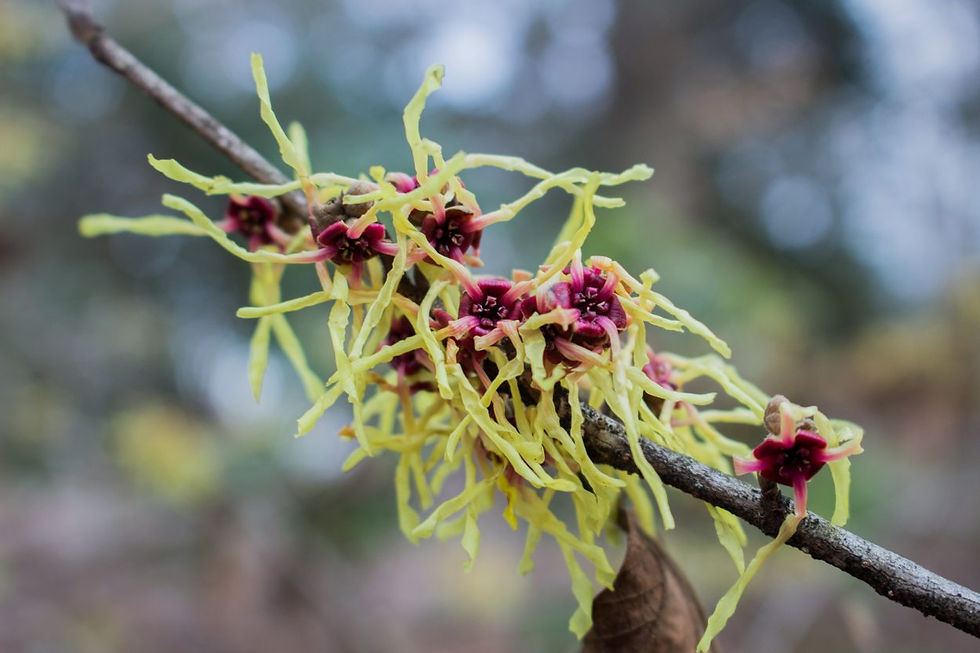
As the days begin to get longer in January some colonies will begin to brood up a bit. Minor brood rearing is stimulated by warm sunny days paired with winter pollen sources such as witch-hazel and mistletoe and ornamentals. The brood will really kick into gear when red maple blooms in mid-February. Winter hive inspections strike a delicate balance between the risks of stressing the bees and the potential to help them avert crisis. I try to do a brief check on bees about once-a-month November through February. Sunny calm days above 50 degrees and early as possible in the day is ideal so the bees have time to reorganize before the temperature plummets at night.
For beekeepers managing their colonies through winter this is a unique period with several management decisions.
Signs of life:
A quick gentle lifting of the back of the hive to see if it's very heavy often means there is no need to break the propolis seal on the lid. Entrance activity or a calm hum when you put an ear to the colony lets us know they are alive.
If you can't hear anything a sharp rap of the knuckles will disturb them and raise their volume. Even this small tapping has been shown to raise their temperature for hours!
I open the lid if something strikes me as concerning such as low stores or the potential for a dead or weak population. Opening the lid reveals so much more to the beekeeper but comes with the drawback of being more stressful to the bees.
Besides the immediate disturbance breaking the propolis seal can cause more cold air drafts in the colony for the rest of the winter. It's often too cold for the bees to seal it back up as well.
Some alternative materials like reflective bubble insulation reseal in any temperature.
I will admit that curiosity often gets the best of me and I open lids without a goal in mind.
I often start to open more lids at the end of January and occasionally find issues like a small cluster that needs attention.
Stores and feeding:
November and December are typically low food consumption months so at this point hives are often still heavy with fall honey. Starvation is uncommon but can happen with very strong hungry colonies that didn't get enough fall forage/feed. It can also happen with very small clusters that get stuck on a patch of brood and don't have the population needed to reach food on an adjacent frame.
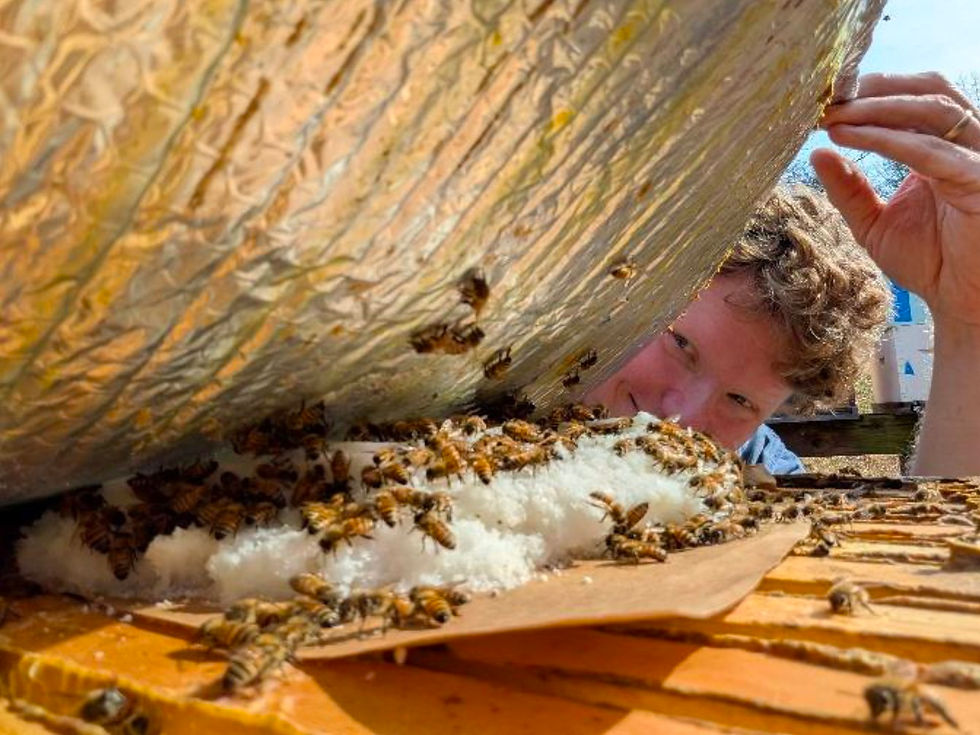
In these instances, a beekeeper can save a colony with emergency feed directly above the cluster. Fondant, sugar bricks, sugar snowballs and even dry sugar moistened with water all work. These are all best applied on paper to keep the feed from falling through the frames. Liquid feed is often problematic in the winter but can work when carefully done in certain instances.
When brood rearing begins the bees will consume food to feed larva and condition the brood nest. They will raise the temperature of the cluster up to ~93 degrees which greatly increases food consumption. Thus, most starvation events happen in February and March as brood rearing is in full swing. Keep checking on their weight!

Mites:
At this point most colonies are either broodless or have very small patches of brood. Thus most or all of the varroa mites are in their dispersal phase feeding on adult bees. Without the protection of brood they are very vulnerable to treatments if a beekeeper wants to treat.
The most common winter treatment is oxalic acid applied as a dribble or with a vaporizer.
The efficacy is thought to be above 90% but the window for treatment is closing as brood rearing will likely begin soon. Many beekeepers try to do 2-3 winter vaporizations to ensure a high mite knockdown. Now is a great time if you plan to treat your bees. Like inspecting treating early as possible in the day when it's above 50 degrees will lower the stress on the bees.
Mice:
During the fall the colony population shrinks and often moves up in the hive into the honey. Cool weather further reduces entrance guards as the bees cluster for warmth leaving the bottom hive area free to be the perfect winter habitat for mice. Many beekeepers use 1/2" hardware cloth or entrance reducers to exclude mice.

Mice not only damage comb and woodenware but also can stress the colony leading to increased food consumption. Mice are persistent and can chew soft wood so a quick check on the entrance to make sure its mouse-proof is a good idea. It's also worth making sure the entrance is not blocked by dead bees and the hive is tilted slightly forward to help drain any moisture.
I hope you are enjoying the winter beekeeping calm before the fun chaos of spring arrives,
Ryan
Photos courtesy of Ryan Williamson


Comments